

Bảng nội dung
Tin tức liên quan
What Is Changing in Wire Harness Assembly in 2026?
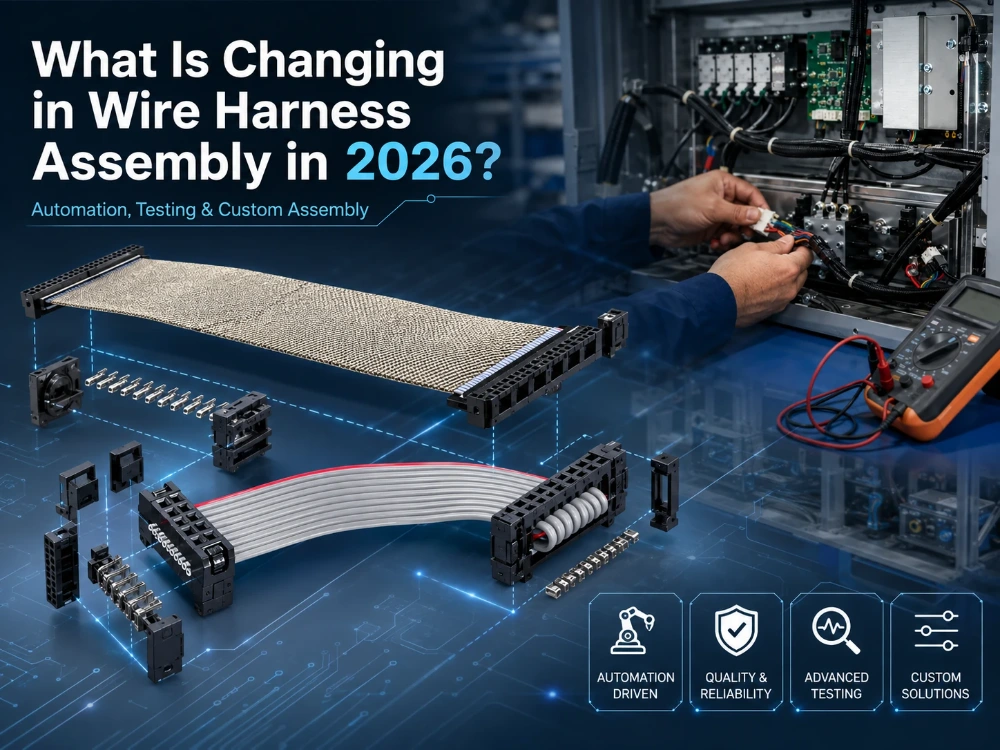
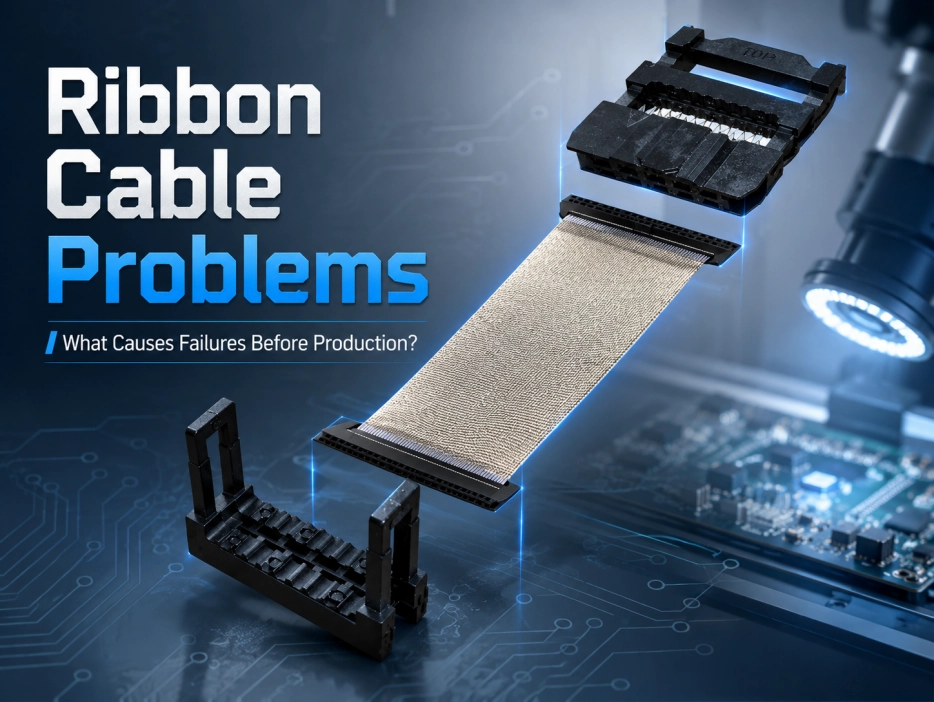
Wire harness assembly in 2026 is not moving toward a factory where every wire is handled by robots. The more practical change is selective automation. Repeatable operations such as cutting, stripping, marking, and some crimping work are becoming easier to control with equipment, while routing, branching, connector loading, and final installation often remain manual or semi-automated.
That shift changes more than factory speed. It affects how engineers prepare drawings, how buyers compare suppliers, how production data is recorded, and how wire harness testing is linked to the approved product revision.
For OEMs, the important question is no longer simply whether a supplier offers wire harness assembly automation. It is whether the complete wire harness assembly process can stay consistent when production volume rises, connector density increases, or the product changes from one revision to the next.
Why Is Wire Harness Assembly Moving Toward a Hybrid Model?
Harness production is harder to automate than many rigid-component processes. Wires bend, twist, overlap, and change shape during handling. A machine can cut a wire to a programmed length very consistently. Asking the same system to route several flexible branches around connectors, clips, and changing fixtures is a very different task.
This is why hybrid production is becoming a more realistic direction than complete automation.
Which operations make sense to automate first?
Stable and repetitive steps are the easiest place to introduce wire harness assembly automation.
Typical candidates include:
- wire cutting;
- controlled stripping;
- marking and identification;
- repetitive terminal crimping;
- selected inspection steps.
These processes have measurable inputs. Wire length, stripping length, terminal position, and crimp settings can be defined before production starts.
That matters because several common cable defects begin at these early stages. Incorrect cutting settings can damage insulation. Poor crimp position or insufficient crimping force can lead to weak terminal retention. If the conductor is prepared too short, it may not seat correctly in the terminal.
Automation is useful here because it reduces variation in operations that should not depend heavily on operator judgment.
Where does manual assembly still make sense?
The later part of the wire harness assembly process is often less predictable.
Multi-branch harnesses may need to be positioned on a form board, routed through a fixture, loaded into different connector housings, tied, sleeved, folded, or checked against a real enclosure. Short production runs may also change frequently.
A skilled operator can adjust to a cable that shifts slightly during routing. Equipment requires a much more controlled presentation of every component.
This is why wire harness assembly automation should be judged step by step. Automating one stable process can deliver more value than trying to automate the entire line before the product family is ready.
What Is Changing Inside the Wire Harness Assembly Process?
The biggest manufacturing change is not one new machine. It is tighter control between materials, processing, connector selection, and inspection.
Cutting, stripping, and crimping are becoming more controlled
A reliable wire harness assembly process starts before connectors are populated.
Wire specification, insulation, terminal type, and tooling must fit one another. A terminal cannot be selected separately from wire gauge and conductor construction. The same is true for IDC processing. The connector contact must match the conductor spacing and penetrate the insulation correctly.
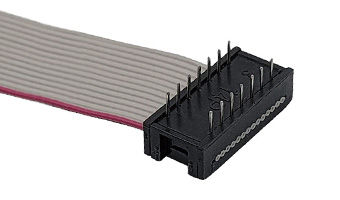
For flat cable applications, IDC technology can terminate several conductors in one pressing operation. For discrete-wire harnesses or mixed connector designs, crimped terminals provide more routing freedom but require individual terminal control.
LEOCABLE’s connector selection guide explains how connector choice, cable construction, termination method, and production volume should be considered together rather than treated as separate purchasing decisions.
The practical change for 2026 is simple: production teams are trying to remove ambiguity earlier. A drawing that only says “black connector” or “28AWG cable” is not enough when the process needs repeatable terminal position, wire sequence, pin direction, and inspection criteria.
Why does connector density change the manufacturing decision?
Electronic equipment continues to put more functions into limited internal space. That increases pressure on connector density, cable routing, and service access.
A smaller connector can save PCB space, but it also reduces room for assembly error. Higher pin counts make orientation and pin correspondence more important.
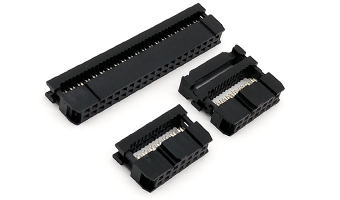
LEOCABLE’s IDC flat cable assembly is one example of how a single cable family can cover different density requirements. It supports 06-80P configurations, with 2.54mm, 2.0mm, 1.27×1.27mm, and 1.27×2.54mm interface options. Available wire spacing includes PH1.27mm, PH1.0mm, and PH0.635mm, while cable length can be customized. Conductive fabric wrapping is also available for shielding and abrasion resistance.
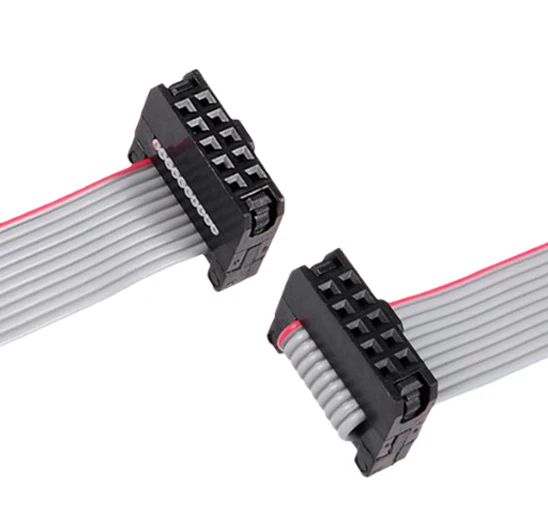
These choices show why connector density is not only a PCB question. The connector, wire pitch, termination process, shielding method, and final routing all need to match.
Why Is Wire Harness Testing Becoming Part of Production Data?
Testing used to be easy to describe on a purchase order: “100% test before shipment.” That wording is increasingly too vague.
A test result only becomes useful when the buyer and manufacturer agree on what is being tested, against which drawing revision, and with what acceptance criteria.
Electrical tests need a defined product identity
Wire harness testing should start with electrical identity.
Continuity can identify an open path, but a harness can still have two wires exchanged and remain electrically continuous. Pin mapping should therefore follow the approved circuit definition.
For straight-through connections, the required pin correspondence should remain fixed. Crossover designs need their own defined mapping. Operator instructions and tester programs must follow the same wiring rule.
Contact condition also matters. Poor terminal contact can come from incorrect crimping, terminal deformation, oxidation, or incomplete IDC penetration.
The existing wire harness testing before mass production guide goes further into continuity, pin mapping, terminal retention, pull-force checks, and installed fit.
Wire harness testing should not become more complicated simply for the sake of adding inspection steps. Each test should answer a real production risk.
Mechanical and installed checks still cannot be ignored
Electrical PASS does not prove that a finished harness is mechanically ready.
A terminal may be electrically correct but insufficiently retained. A cable may meet its overall length while still pulling against the connector once installed. Shielding may be present but damaged during processing.
Useful production checks can include:
|
Check |
What it should reveal |
|
Pin continuity |
Missing electrical paths |
|
Pin mapping |
Crossed or incorrect circuits |
|
Contact condition |
Poor or unstable terminal contact |
|
Insulation inspection |
Cuts, cracks, or handling damage |
|
Retention or tensile check |
Weak terminal attachment |
|
Shielding inspection |
Damage or incomplete shield treatment |
|
Installed-fit review |
Routing, bend, clearance, and connector stress |
LEOCABLE production control also uses raw-material checks, process control, and finished-product inspection covering items such as continuity, contact resistance, shielding condition, insulation integrity, and tensile testing.
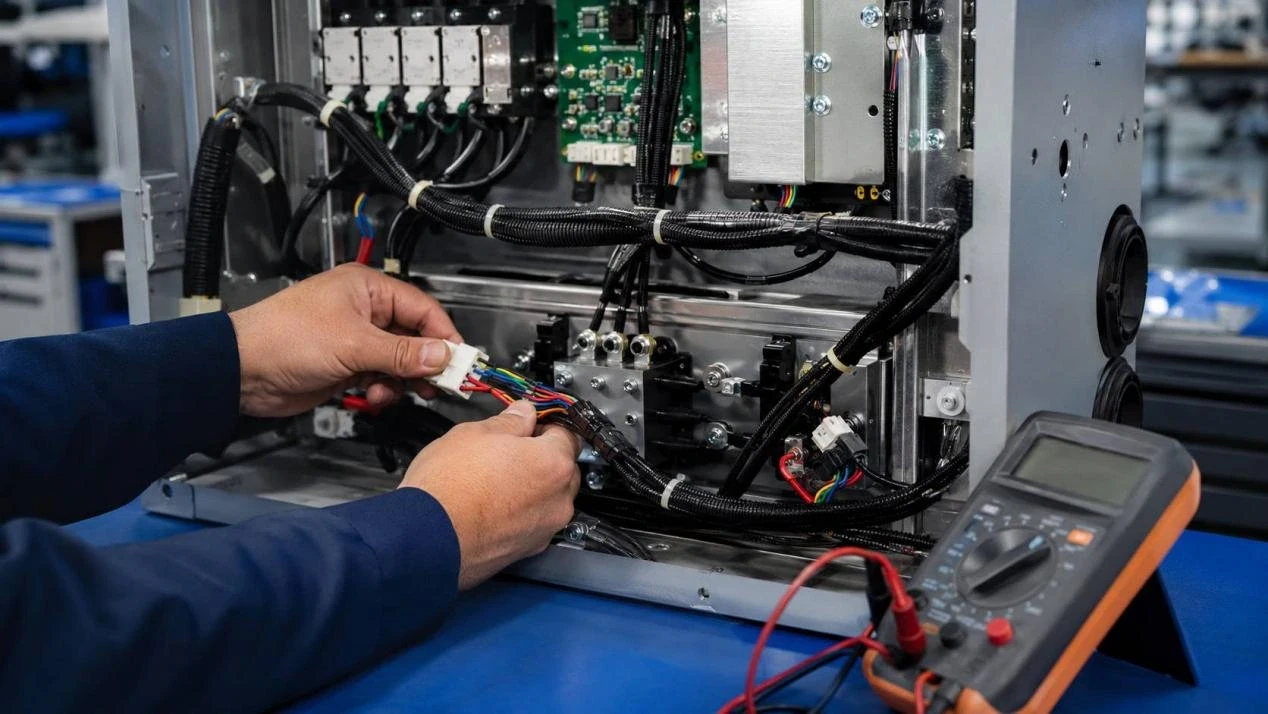
The next step is traceability. If a harness fails, the useful question is not just “Did it pass?” It is which material, process, drawing revision, tester program, or batch was involved.
How Is Custom Wire Harness Assembly Changing for OEM Buyers?
A custom project used to rely heavily on samples. Samples are still important, but production is moving toward clearer definitions that can survive repeat orders and product revisions.
Why do RFQs need more production-ready details?
A useful custom wire harness assembly RFQ should define more than connector names and cable length.
Depending on the design, buyers may need to confirm:
- connector and terminal models;
- mating interface;
- wire specification;
- cable or branch length;
- pin assignment;
- polarity;
- connector viewing direction;
- labels and marking;
- shielding;
- retention features;
- routing requirements;
- test method;
- drawing revision.
For buyers preparing a new custom wire harness assembly, the existing guide to custom wire harness specifications shows how function marking, terminal details, wire colors, sample approval, and revision control can be turned into repeatable order requirements.
The reason becomes even stronger as wire harness assembly automation grows. A worker may notice an unclear drawing and stop to ask a question. Automated processing works best when the required result has already been defined.
Why does supplier integration matter more?
Modern internal wiring can involve several connection methods in one equipment platform.
One project may use IDC flat cables for board-to-board signals, discrete terminal harnesses for switches, shielded cable near noisy equipment, and a separate power assembly. Treating each connection as an unrelated component creates more interfaces between engineering, purchasing, and manufacturing.
LEOCABLE was founded in 2013 and operates a vertically integrated manufacturing structure covering design and development through final assembly. Its range includes connectors, IDC flat cable assemblies, terminal harnesses, SATA cables, USB assemblies, and other equipment wiring products.
That structure gives OEM teams a practical advantage when the connector, cable, terminal, sample, and final assembly need to be reviewed together.
What Should OEM Teams Prepare for Wire Harness Assembly in 2026?
The strongest 2026 projects will not necessarily be the ones using the most automation. They will be the ones that are easiest to define, build, test, and repeat.
Before requesting a quotation or production review, it helps to prepare the following:
|
Project item |
Tại sao điều đó lại quan trọng |
|
Connector and mating part |
Confirms physical compatibility |
|
Wire and cable specification |
Sets electrical and processing requirements |
|
Pin map |
Defines the required circuit |
|
Cable and branch dimensions |
Controls routing and fit |
|
Shielding requirement |
Defines EMI-related construction |
|
Approved sample |
Provides a physical workmanship reference |
|
Test criteria |
Defines production acceptance |
|
Drawing revision |
Keeps production and quality aligned |
Wire harness assembly automation is valuable when it removes variation from repeatable work. It is less useful when engineering inputs are still changing every week.
The same rule applies to custom wire harness assembly. Before scaling, confirm the design, sample, routing, terminal method, and wire harness testing requirements together. Buyers with drawings, samples, mating connectors, or equipment layouts can Liên hệ LEOCABLE to review the connection structure and production requirements before batch release.
Phần kết luận
Wire harness assembly in 2026 is becoming more controlled rather than simply more automated. Repeatable cutting, stripping, marking, crimping, and testing operations are strong candidates for equipment-based control, while flexible routing, branching, connector loading, and complex final assembly still favor hybrid production in many projects.
At the same time, compact electronics are pushing connector density higher, which makes pitch, pin mapping, orientation, shielding, and routing more important. Wire harness testing is also moving closer to production traceability instead of ending with a simple PASS label.
For OEM buyers, the main change is clear. A strong wire harness assembly process begins with better engineering information. Clear drawings, matched materials, approved samples, defined tests, and controlled revisions make automation more useful and repeat orders easier to manage.
Câu hỏi thường gặp
Q1: Will wire harness assembly become fully automated in 2026?
A1: Full automation is unlikely to suit every project. Cutting, stripping, marking, repetitive crimping, and selected testing steps have strong automation potential. Complex routing, branching, connector loading, and variable custom work often remain manual or hybrid because flexible wires are harder to handle consistently.
Q2: What is the biggest benefit of wire harness assembly automation?
A2: The biggest benefit of wire harness assembly automation is repeatability in stable processes. Controlled cutting, stripping, crimping, and testing can reduce variation when the material, terminal, tooling, and product definition remain fixed. Automation works best after the process itself has been clearly defined.
Q3: What should buyers provide for a custom wire harness assembly project?
A3: Buyers should provide connector and terminal details, wire specification, pin map, finished dimensions, branch positions, polarity, labeling, shielding requirements, expected quantity, and test criteria. A drawing and approved physical sample are especially useful when the project will move into repeat production.