

Flat Cable vs Round Cable: Which Is Better for Compact Industrial Equipment in 2026?

For compact industrial equipment in 2026, flat cable is often the better option when the design priority is space control, clean routing, and repeatable internal connections. Round cable still has a place, but it usually performs better in layouts that need more freedom of movement, less structured routing, or extra mechanical tolerance. The right choice depends on how the cable must behave inside the equipment, not on habit or a default purchasing rule.
This matters more now because compact industrial equipment keeps adding ports, functions, and interface density without gaining internal space. A small controller, embedded platform, industrial computer, or data acquisition unit may still need several signal paths, multiple serial channels, and service-friendly internal wiring. In that situation, cable geometry directly affects assembly quality, signal stability, maintenance access, and long-term reliability.
Why Cable Shape Matters More in 2026
Higher function density changes internal wiring priorities
Industrial devices continue to shrink while I/O demand stays high. More boards, more ports, and more mixed communication paths now sit inside smaller housings. That increases pressure on every routing decision. A cable is no longer just a conductor. It becomes part of the equipment architecture.
Flat cable fits this trend well because it uses a controlled, low-profile shape. It can lie close to surfaces, pass through narrow internal spaces, and reduce the stacked bulk that often appears with bundled round conductors. In compact industrial equipment, that difference can affect clearance around connectors, airflow paths, service openings, and PCB access.
Legacy serial communication is still part of real equipment
Modern industrial systems continue to adopt Ethernet, edge connectivity, and remote monitoring, yet serial communication remains important in PLCs, industrial computers, test systems, and data acquisition systems. Many OEM products still need stable serial channels for device control, diagnostics, or interface bridging. As a result, serial cable assembly design remains relevant in 2026, especially where several channels must stay organized inside a tight enclosure.
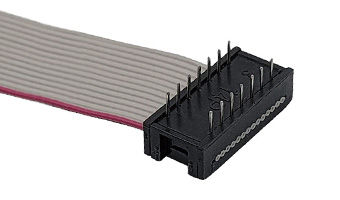
That is where flat ribbon cable often gains a practical advantage. It keeps conductor order visible and stable, which helps maintain cleaner routing in multi-port systems. Round cable can also support serial communication, but once several paths run side by side, it usually creates a looser internal layout.
Where Flat Cable Usually Performs Better
It uses internal space more efficiently
The strongest advantage of flat cable is space efficiency. Because the conductors sit in a defined plane, the cable can follow compact paths with less vertical buildup. That makes it useful in small housings where routing height matters as much as routing length.
This becomes especially important when several interfaces share the same internal volume. A flat ribbon cable can reduce visual clutter and simplify line management. In compact industrial equipment, this makes the design easier to assemble and easier to service later.
It supports cleaner multi-port routing
Flat cable also works well when the system includes repeated signal groups or several serial paths. A multi-channel layout benefits from consistent conductor order, especially when service staff need to trace a channel quickly. In a multi-port environment, cable organization is not only a cosmetic issue. It affects fault isolation, installation speed, and the chance of routing errors.
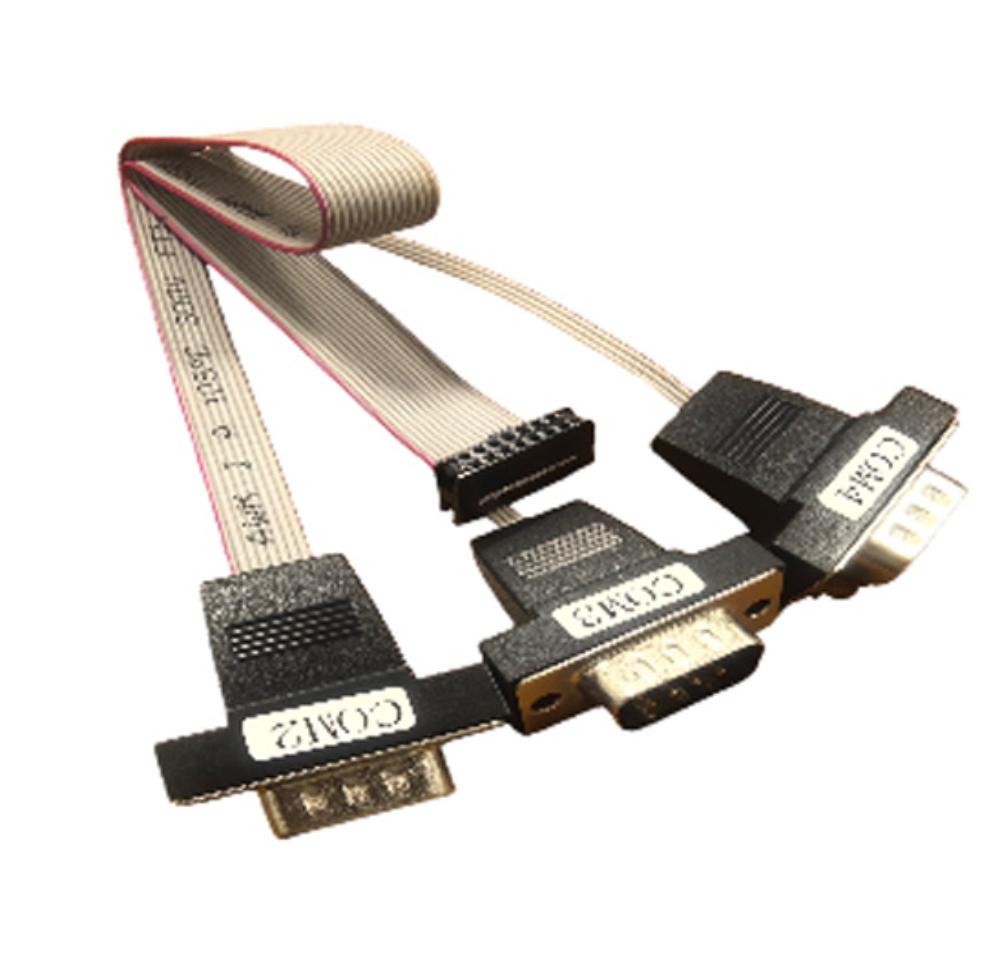
A good example is our Professional Multi-Serial Port Flat Cable Assembly. This product uses a triple serial port structure for COM1, COM2, and COM3, combined with UL2651 28AWG gray flat cable, a PH1.0mm conductor pitch, and a PH2.0mm IDC socket interface. In practical equipment design, this type of serial cable assembly is useful when several serial channels must stay compact, orderly, and reliable inside one enclosure.
It matches IDC socket termination well
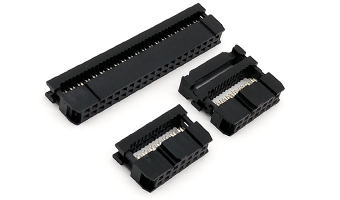
Flat cable and IDC socket design are a strong combination in high-density wiring. The geometry supports accurate conductor alignment and efficient termination. That improves assembly consistency and makes the layout easier to standardize in volume production.
For many B2B projects, this matters as much as the cable itself. A design that performs well electrically but creates variation in production is rarely the best long-term solution. In our OEM and ODM work, we usually see better repeatability when a flat cable is paired with the right IDC socket pitch and internal routing plan. This is one reason flat cable remains common in industrial control systems, communication equipment, and test platforms.
Where Round Cable Still Has the Advantage
It gives more freedom in irregular routing paths
Round cable remains a strong option when the route is less structured. If the cable must twist, move around uneven internal features, or tolerate more installation variation, a round cable can be easier to manage. Some equipment does not have a clean linear routing path, so the packaging advantage of flat cable becomes less important.
This is particularly relevant in products where movement, flex, or installation angle changes are part of normal use. In those cases, a round cable may provide a better balance between mechanical convenience and electrical function.
It may suit tougher routing conditions
Round cable can also be the better fit when the design focus shifts away from packaging density and toward routing freedom, longer cable paths, or extra external protection. A flat cable is excellent in compact, organized internal wiring, but that does not mean it is automatically the best choice for every path in the product.
Engineers should also consider the signal environment. If the run is longer or the system faces stronger electromagnetic interference, the cable decision should include shielding strategy, conductor size, and grounding quality. Shape matters, but environment matters more.
How Engineers Should Make the Decision
The best comparison is not a checklist copied from a catalog. It is a design review based on real equipment needs.
Start with the enclosure. If the product has limited internal height, dense connector placement, and repeated signal routing, flat cable usually has a stronger case. It can improve cable routing, simplify service access, and support cleaner high-density wiring. That is why flat cable often performs well in compact industrial equipment, especially where several serial channels must remain clearly separated.
Next, review the interface structure. If the product uses IDC socket termination or benefits from a consistent conductor order, flat ribbon cable often improves assembly control. In contrast, if the product needs more flexible pathing or more tolerance during installation, round cable may be the better choice.
Then review maintenance and production. A cable design should work not only in CAD, but also during sample build, inspection, repair, and volume assembly. This is where we usually look beyond unit cost. A cheaper cable choice can create routing congestion, longer assembly time, and more service complexity later.
Why This Decision Connects to OEM and ODM Execution
Cable selection affects more than the finished hardware. It also shapes the project flow from technical review to mass production. In OEM and ODM projects, a cable that fits the enclosure, connector system, and assembly method from the start usually saves time later.
This is where LEOCABLE’s manufacturing model becomes relevant in a measured way. The company supports OEM and ODM collaboration, technical review, sample approval, scalable production, and ongoing support, while its vertically integrated structure helps keep quality, delivery control, and response speed closer to the production floor. For buyers working on compact equipment, that kind of coordination can matter as much as the cable specification itself.
This does not mean every project needs a custom cable. It means the cable decision should match the product architecture, production plan, and maintenance expectations. In compact industrial equipment, this often leads back to flat cable when the design includes dense serial routing, compact packaging, and IDC socket connections.
Final Recommendation
In 2026, flat cable is usually the better choice for compact industrial equipment when the design needs efficient space use, orderly multi-port routing, and reliable high-density wiring. It is especially effective for serial cable assembly layouts in industrial control systems, communication equipment, data acquisition systems, and test platforms.
Round cable still deserves consideration when the routing path is irregular, the mechanical path needs more freedom, or the cable must adapt to a less structured installation environment. The better option depends on the equipment itself, not on a general preference.
For many compact industrial designs, the better answer is to treat cable geometry as part of the system design early in the project. When that review includes enclosure limits, connector pitch, assembly flow, and long-term service needs, the right choice becomes much clearer. If your project requires that kind of evaluation, contact us.
FAQ
Q: Is a flat cable the same as a flat extension cord or flat electrical cord?
A: No. In industrial equipment, flat cable usually refers to an internal signal or connection cable with a controlled conductor arrangement. A flat extension cord, flat cord extension cord, or flat electrical cord usually refers to a consumer power product and serves a different purpose.
Q: When is flat cable better than round cable in compact industrial equipment?
A: Flat cable is usually better when the design has limited internal space, dense port layouts, repeated signal groups, or IDC socket termination. It is also helpful when service access and routing clarity matter.
Q: When should a round cable still be considered?
A: A round cable is still a strong choice when the route is irregular, the cable must bend more freely, or the installation environment gives mechanical flexibility higher priority than compact routing.