

How to Choose a Compact PCB Connector for Industrial Automation in 2026

Industrial automation in 2026 is moving in two directions at the same time: control systems are getting more capable, and internal space is getting tighter. Factory robots are spreading further across manufacturing, while AI-driven electronics are pushing designers toward denser layouts, faster data handling, and more modular hardware. That shift makes compact PCB connector selection a practical engineering issue, not a small mechanical detail. A connector that saves board space but loses stability under temperature change, vibration, or repeated use can create signal faults, maintenance delays, and avoidable downtime.
That is also why LEOCABLE fits naturally into this discussion. Since 2013, we have focused on cables and connectors for demanding applications, supported by vertically integrated manufacturing that gives us control from design and development to final assembly. For engineers and buyers working on industrial control boards, telecom hardware, compact internal wiring, or production line electronics, the real question is simple: how do you choose a compact PCB connector that keeps the design small without making the system fragile?
Why compact PCB connector selection matters more in 2026
Industrial automation is no longer limited to large cabinets with generous wiring margins. More projects now involve compact control boards, dense I/O layouts, edge devices, sensor modules, robotics subsystems, and communication equipment that need more functionality inside less space. The International Federation of Robotics reports that the global market value of industrial robot installations reached an all-time high of US$16.7 billion, and factory robot density continues to rise across Europe, North America, and Asia. At the same time, electronics suppliers are pointing to 2026 as a year shaped by AI-driven data growth, modular architectures, and higher interconnect density across industrial automation and other sectors.
In practice, that changes what a compact PCB connector has to do. It is not enough for the connector to match the hole pattern on the board. It also needs to support stable signal transmission, maintain contact quality over time, fit a dense PCB layout, and hold up across realistic operating temperatures. If the internal interconnect is weak, the rest of the board cannot perform as designed.
What does a compact PCB connector need to deliver in industrial automation?
Choosing a compact PCB connector starts with the layout, but good selection does not stop there. In industrial automation, the safer approach is to look at footprint, electrical stability, temperature margin, assembly logic, and application fit as one package.
Footprint and routing efficiency
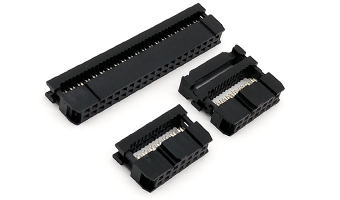
Compact PCB design usually begins with pitch and available board area. Smaller interconnect structures can free space for additional circuits, cleaner routing, or more compact module dimensions. Pitch is the main feature that separates many IDC and related interconnect families, because pitch affects terminal spacing, cable matching, and how much density a board can support. That is one reason compact fine-pitch solutions remain relevant in modern industrial electronics.
A practical compact connector should also support dense PCB layouts without forcing awkward routing decisions. If the connector footprint fits the board but creates assembly difficulty or cable stress, it only moves the problem downstream.
Stable electrical performance
In industrial automation, electrical performance is the center of connector selection. Contact resistance, insulation resistance, and withstanding voltage are not abstract specification lines. They affect whether signals stay clean, whether low-level data remains reliable, and whether the design keeps a safe electrical margin during long operating cycles.
The selection logic in the COM I/O guide is useful here: stable signal transmission depends on matching the terminal interface, cable path, and application environment rather than choosing a connector by size alone. The same guide also emphasizes that terminal material, contact quality, and anti-loosening features matter because weak contact can lead to intermittent signal faults in production and field use.
Material and temperature margin
Industrial electronics rarely operate in controlled office conditions. Boards may sit near power components, in control boxes, or in equipment that cycles through temperature swings over long periods. That makes housing material and operating temperature range part of the selection process, not optional details.
A connector built with PBT glass fiber and UL94V-0 insulation has a stronger foundation for demanding electronic environments, especially where durability, insulation performance, and flame-retardant behavior matter. Temperature capability also matters because a connector that performs well only in mild conditions can turn into a weak point once it moves into a real industrial setting.
Pin-count flexibility and production practicality
Many industrial automation projects do not use one fixed board version forever. Control boards, I/O modules, interface boards, and communication units often need multiple circuit counts across a product family. A compact PCB connector that offers flexible pin-count options makes it easier to manage and reduces redesign pressure.
Production practicality matters as well. The COM I/O guide notes that interconnect selection should consider installation method, production requirements, and environment together. In other words, a connector should fit both the board and the manufacturing workflow.
A practical compact connector example for industrial boards
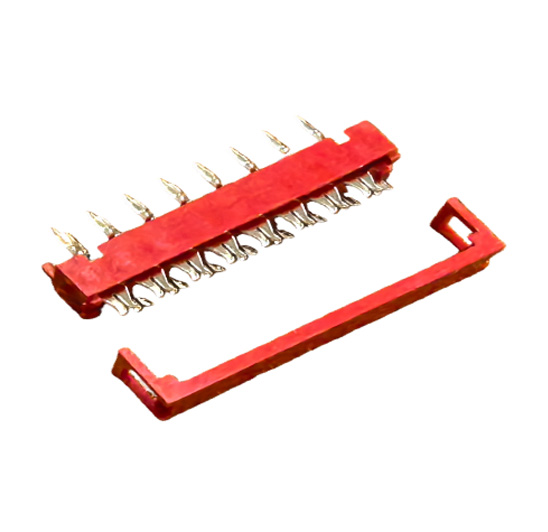
A useful example is the 1.27*1.5mm Micro-Match-DIP Plug. For compact industrial boards, this type of connector works well because it brings small size and usable electrical performance into the same decision. It supports 04–26P circuits, uses a PBT glass fiber insulator rated UL94V-0, and uses brass contacts. Its rated current is 1A, operating temperature range is -40°C to +105°C, contact resistance is 20mΩ max, minimum insulation resistance is 1000MΩ, and withstanding voltage is 500V AC/min. It is also positioned for electronic equipment manufacturing, telecommunications infrastructure, industrial automation and control systems, and production line circuitry and signal transmission.
Those details matter because they line up with the real selection logic discussed above. The 04–26P range gives room for different board needs. The temperature range supports use in electronics that do more than sit on a bench. The contact resistance and insulation values support stable connectivity expectations for compact control and communication boards. The housing material and compact structure make it easier to integrate into PCB layouts where space cannot be wasted. In short, this is the kind of connector that belongs in a compact PCB connector conversation because it answers actual industrial concerns rather than only chasing a smaller footprint.
Common selection mistakes that create problems later
A large share of connector problems starts long before the board goes into service. The issue is often not that the connector is defective. The issue is that the selection process was too narrow.
Choosing by pitch alone
Pitch matters, but pitch alone is not enough. A compact fine-pitch connector may look right on the drawing and still create trouble if contact quality, insulation performance, operating temperature, or mating stability were not considered early enough. Dense layout is useful only when the electrical side remains stable.
Ignoring cable path and interference risk
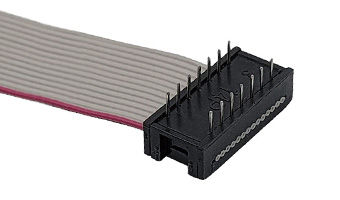
A connector does not work by itself. It works as part of a signal path. The COM I/O guide makes this point clearly by treating connection method, cable specification, and terminal interface as three linked decisions. For general internal routing, UL2651 28AWG flat cable is often practical because it supports compact internal cabling. For more interference-prone environments, shielded cable may be the better route, especially near high-frequency equipment or where signal stability is critical. The same guide recommends extra care once the cable length exceeds 5 meters, because signal attenuation and interference risk both become harder to ignore.
Treating contact quality as a secondary issue
In production, an intermittent signal is often tied to poor terminal contact, oxidation, loose crimping, or incomplete IDC penetration. That is why terminal material and connection quality deserve attention early. The COM I/O guide highlights poor terminal contact as a major source of intermittent signal problems and recommends tight process control for crimping, contact resistance, and terminal condition. Even a good compact PCB connector can underperform when the contact interface is treated casually.
Where this type of connector fits best in 2026 projects
The value of a compact connector becomes clearer when matched to the right applications.
Industrial control boards and I/O modules
Control boards often need compact layout, stable connectivity, and predictable long-term performance. That makes small multi-circuit connectors especially useful in PLC-related boards, I/O modules, interface cards, and compact industrial computers. When internal space is limited, the connector size influences the whole board architecture.
Telecom and communication equipment
Data communication equipment and telecom hardware continue to move toward denser internal layouts. Electronics industry forecasts for 2026 point to stronger demand for high-speed interconnects, modular architectures, and higher density as AI-related processing expands. Even when a specific board is not a hyperscale data-center product, the design pressure moves in the same direction: more signals, less space, tighter packaging.
Production line electronics and compact internal wiring
Production line circuitry and equipment manufacturing need connectors that are straightforward to integrate and stable over time. For these projects, a small footprint alone is not enough. The connector must also support clean board integration, practical circuit-count options, and electrical consistency across repeated installation and use. That is where a compact industrial connector earns its place.
Service matters after the connector is selected
A well-chosen connector solves only part of the project. The rest depends on how the product is matched to the board, cable, assembly method, and delivery plan. That is why service should be part of connector selection, especially when the project may involve custom cable assemblies, pitch matching, OEM/ODM development, or changes between prototype and production.
Our role is to support that transition without turning the discussion into a sales script. A practical service model should help with requirement review, application matching, prototype coordination, production consistency, and delivery control. Vertical integration is useful here because it improves response speed and production control across the path from development to final assembly. For compact PCB connector projects, this reduces friction when the design needs more than an off-the-shelf answer.
If your project is comparing options for a compact PCB connector for industrial automation, or if it also involves flat cable, IDC socket, or related interconnect requirements, the best next step is simple: contact us before the board is finalized. That conversation usually saves more time than fixing a connector choice after release.
FAQ
Q:What is the most important factor when choosing a compact PCB connector for industrial automation?
A:The most important factor is not size alone. A compact connector should fit the PCB layout and also maintain stable electrical performance, suitable temperature tolerance, reliable insulation, and practical assembly compatibility.
Q:When is a fine-pitch connector a better choice than a larger connector?
A:A fine-pitch connector is usually a better choice when the board layout is dense, internal space is limited, or the design needs more circuits in a smaller area. It becomes especially useful in industrial control boards, communication equipment, and compact internal electronics.
Q:Can one compact connector family support multiple industrial applications?
A:Yes, if the connector offers suitable pin-count flexibility, stable electrical performance, and a structure that works across different layouts. The same connector family can often support control boards, telecom equipment, and production line electronics when the application requirements are matched carefully.