
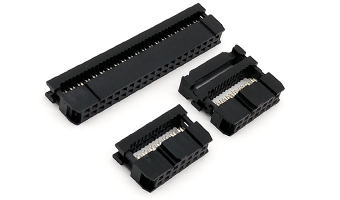
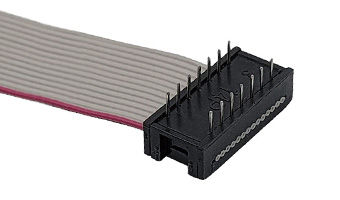

IDC Socket Connector Guide 2026: Choosing Ribbon Cable Connectors for High-Density PCB Wiring
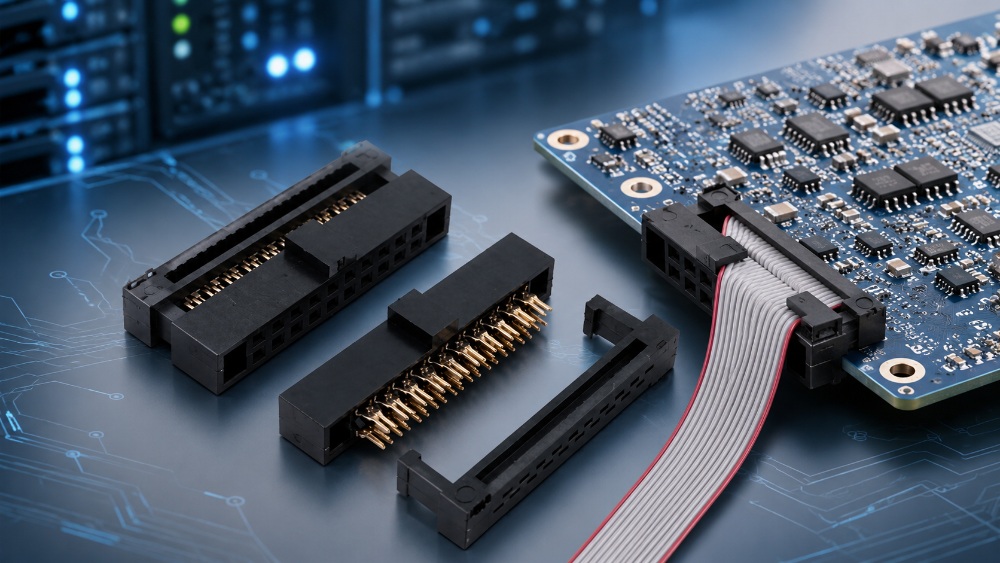
Electronic equipment is becoming smaller, denser, and more connected. In industrial controllers, communication devices, medical instruments, test equipment, and embedded systems, internal wiring must carry signals reliably while using less board and enclosure space. That is why the idc socket connector remains important for engineers and sourcing teams working on high-density PCB wiring.
The challenge is not only finding a connector that fits. The real decision involves pitch, pin count, cable match, contact reliability, assembly efficiency, and the way the connector behaves in the final device. This guide explains how to choose ribbon cable connectors for compact internal layouts in 2026, with practical points for B2B electronics projects.
Why IDC Socket Connectors Matter in High-Density PCB Wiring
Before selecting a part number, it helps to look at the wiring problem itself. Compact electronic systems often need many signal channels in a limited area. A flat cable and IDC structure can simplify that layout, but only when the connector matches the board, cable, and operating conditions.
Compact devices need cleaner internal cable routing
High-density PCB wiring usually leaves little room for bulky harnesses or scattered individual wires. A flat ribbon cable helps keep conductors aligned in a predictable path, which can make internal cable management cleaner and easier to inspect.
This matters in industrial automation, data communication equipment, medical devices, and test instruments. In these applications, wiring errors can cause downtime, difficult troubleshooting, or unstable signal performance. A well-matched idc socket gives the equipment designer a more organized way to connect multiple conductors between boards, panels, and control modules.
IDC termination supports efficient assembly
IDC termination is widely used because it reduces manual wire preparation. Instead of stripping and crimping each conductor separately, the cable is pressed into the connector so the contact cuts through the insulation and reaches the conductor.
For mass production, this structure can save labor and improve consistency. It is especially useful when an idc cable needs repeated, accurate termination across many units. However, efficiency depends on correct pitch matching, proper tooling, cable thickness, and stable connector materials. A fast process still needs controlled assembly.
Signal stability depends on the full connection system
Some teams focus mainly on the cable, but the connector structure is just as important. Contact material, plating, insulation body, locking structure, and contact resistance all affect long-term performance.
When ribbon cable connectors are used in vibration-prone equipment or compact enclosures, small mechanical details matter. A connector that fits the board but lacks secure engagement may cause intermittent contact. A connector with an unsuitable pitch may create production errors. A suitable choice is the one that fits both the electrical design and the real installation environment.
Key Factors When Choosing Ribbon Cable Connectors in 2026
The connector market includes many pitch sizes, forms, and cable combinations. Choosing only by price or appearance can create problems later in sampling, assembly, or field use. The points below help narrow the selection before moving to prototypes.
Pitch size: 1.27mm, 2.0mm, and 2.54mm
Pitch is one of the first details to confirm. A 2.54mm pitch is common in many traditional electronic assemblies and offers easier handling. A 2.0mm pitch can support more compact layouts while keeping reasonable assembly convenience. A 1.27mm pitch is often selected when board space is tight and more signal channels must fit into a smaller connector footprint.
For high-density PCB wiring, 1.27mm designs are especially relevant. They help reduce connector width while supporting multi-pin layouts. This can be useful in industrial computers, network equipment, medical electronics, and compact control systems where internal space is limited.
Pin count and cable matching
The connector must match the required conductor count and the cable pitch. If the cable and contact spacing do not match, the termination may look complete but still create poor contact. This can lead to signal loss, intermittent communication, or failed continuity tests.
Before choosing an idc cable, engineers should confirm the PCB connector footprint, cable conductor spacing, required pin count, and the direction of cable exit. For production teams, clear polarity marking and foolproof features can reduce assembly mistakes.
Locking design and anti-mismating features
In real equipment, connectors face movement, handling, vibration, and maintenance. Locking structures help reduce the risk of loosening. Anti-mismating designs help prevent incorrect insertion during assembly or repair.
These features are not only useful for harsh environments. They also support smoother production, because operators can identify the correct orientation more easily. For compact products with multiple similar connectors, a foolproof structure can prevent errors that are hard to detect after final assembly.
Where 1.27mm IDC Socket Connectors Fit Best
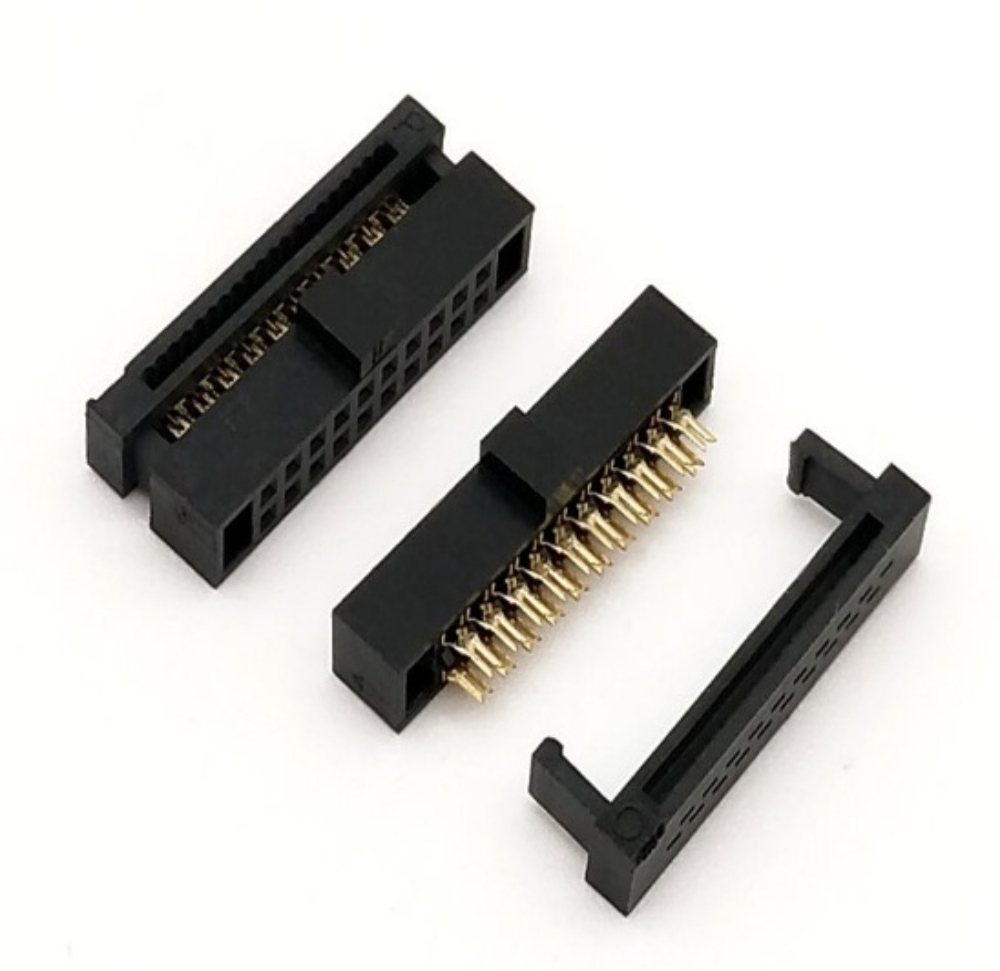
A 1.27mm connector is not the right answer for every project. It is most valuable when equipment needs dense signal routing, clean internal wiring, and stable multi-channel connections within a limited space. The following application areas often benefit from that balance.
工業自動化和控制系統
Industrial equipment often includes controllers, I/O modules, servo systems, industrial computers, and sensor interfaces. These devices need internal connections that remain stable under repeated operation and occasional maintenance.
A compact idc socket connector can help route signals between boards and modules without taking excessive enclosure space. In control systems, this can improve layout neatness and reduce wiring complexity. It also supports easier inspection during production and repair.
Data communication and networking equipment
Servers, switches, routers, and communication modules often require high-density internal signal routing. Space inside these devices is valuable, and airflow, cable order, and service access all influence the final design.
A flat ribbon cable can help keep internal wiring aligned and compact. When paired with a suitable IDC receptacle, it supports an organized multi-conductor connection in a narrow area. For networking equipment, this kind of structure can make assembly cleaner and maintenance more predictable.
Medical, test, and measurement equipment
Medical and measurement devices often require stable signal paths, clear internal layouts, and consistent assembly quality. These products may also need compact wiring because the enclosure design leaves little extra room.
For these projects, connector selection should consider insulation resistance, contact resistance, working temperature range, material strength, and mechanical engagement. The goal is not only connection, but repeatable performance through production and use.
How to Evaluate an IDC Socket Connector Before Sourcing
Sourcing teams and engineers often evaluate samples under time pressure. A simple checklist can prevent weak-fit components from entering the design too early. The following checks are practical before sample approval.
Check electrical and mechanical specifications
Start with rated current, rated voltage, contact resistance, insulation resistance, withstand voltage, and operating temperature. These specifications help confirm whether the connector can work within the device environment.
Material also matters. PBT engineering plastic with flame-retardant performance is widely used in electronic connectors because it supports mechanical strength and heat resistance. Contact material and plating influence conductivity, oxidation resistance, and long-term contact stability.
Review assembly efficiency and production consistency
IDC parts are often selected for faster assembly, but production quality depends on process control. The cable must be placed correctly, the press force must be suitable, and the contact should fully reach the conductor.
During sample validation, teams should test continuity, inspect contact position, check cable retention, and verify orientation. For mass production, a stable process is just as important as a good component.
Match the connector to real equipment conditions
A connector used in a bench prototype may perform differently inside a compact enclosure. Bending space, cable exit direction, vibration, heat, and maintenance access should all be reviewed before final approval.
For equipment with a tight layout, flat ribbon cable can reduce cable height and keep conductors orderly. For environments with stronger movement or stress, strain relief and secure locking become more important.
A Practical 1.27mm IDC Receptacle Option for Dense Layouts
After the general selection logic is clear, product choice becomes easier. For projects that need compact dual-row connections, Leocable offers connector and cable solutions for internal equipment wiring, industrial electronics, data communication, and related B2B applications.
Designed for dense PCB and flat ribbon cable layouts
這 1.27mm x 1.27mm兩件式IDC插座連接器 is suitable for compact PCB layouts that require multi-pin signal connections. It supports 06-80P configurations and uses a 1.27mm x 1.27mm double-row precision structure.
This structure fits projects where a standard larger connector may take too much board space. It can work well with dense internal routing in industrial automation, data communication equipment, high-end consumer electronics, medical devices, and test or measurement systems.
Built for stable contact and controlled assembly
The product uses a PBT+GF UL94V-0 insulator and phosphor bronze contacts with full gold plating and nickel plating. Its rated current is 1A AC/DC, rated voltage is 250V AC/DC, operating temperature range is -40°C to +105°C, contact resistance is 20mΩ, minimum insulation resistance is 1000MΩ, and withstand voltage is 500V AC/min.
These parameters make it suitable for signal connection projects where compact size and stable contact are both required. The two-piece structure and locking mechanism also help support connection stability during assembly and use.
Suitable for customized internal connection projects
Many OEM-style projects need more than a standard connector. Pin count, cable length, cable direction, flat cable type, and device layout may all require adjustment. For this reason, teams often need early design discussion before the connector is locked into the PCB and enclosure.
For projects that require customized connector or cable assembly support, our ODM and OEM service can help align pitch, pin count, wiring layout, and application requirements before production.
Practical Selection Checklist for Ribbon Cable Connectors
A clear checklist helps engineering, purchasing, and production teams work from the same standard. It also reduces the chance of approving a connector that works in theory but fails during assembly.
Confirm pitch and pin count first
Start with the PCB layout. Confirm the connector footprint, available space, required signals, and pin count. If the equipment needs a compact layout, a 1.27mm IDC structure may be more suitable than a larger pitch.
Then confirm whether the selected cable matches the connector pitch and termination style. This step is essential for a reliable idc cable assembly.
Match cable type with installation space
A flat ribbon cable is useful when the equipment needs neat, low-profile internal routing. It can reduce clutter and make conductor order easier to identify. However, the cable path should not create sharp bends or unnecessary stress near the connector.
If the device has a moving part, tight bend radius, or frequent maintenance requirement, the cable design should be tested under real installation conditions.
Verify contact reliability before mass production
Before production approval, test continuity, contact resistance, insertion orientation, cable retention, and assembly consistency. It is also useful to inspect samples after vibration, handling, or repeated connection cycles when the equipment environment requires it.
This step helps prevent batch issues such as poor contact, wrong cable direction, loose termination, or difficult field maintenance.
Conclusion: Choosing the Right IDC Socket Connector for 2026 Electronics
The right connector for high-density PCB wiring is not chosen by size alone. Engineers need to balance pitch, pin count, cable match, contact design, locking structure, assembly efficiency, and real equipment conditions.
For compact electronic systems, an idc socket can support cleaner internal wiring and more efficient multi-conductor termination. When paired with the right flat cable and validation process, it can help improve layout order and production consistency.
If your project needs a compact IDC receptacle, custom cable assembly, or help matching pitch and wiring layout, share your connector requirements with our team. Early discussion can reduce redesign risk and make the final connection solution easier to manufacture.
常見問題
Q: What is an IDC socket connector used for?
A: It connects multi-conductor flat cable to PCB or equipment interfaces without stripping each wire separately.
Q: How do I choose ribbon cable connectors for high-density PCB wiring?
A: Check pitch, pin count, cable match, locking design, contact resistance, and available space inside the equipment.
Q: Is a 1.27mm IDC socket suitable for compact electronic devices?
A: Yes. A 1.27mm structure is often suitable when the PCB layout needs dense signal routing in a limited space.