

Table des matières
Nouvelles connexes

Connecteurs IDC de 1,27 mm, 2,0 mm et 2,54 mm : quel pas convient à votre circuit imprimé ?
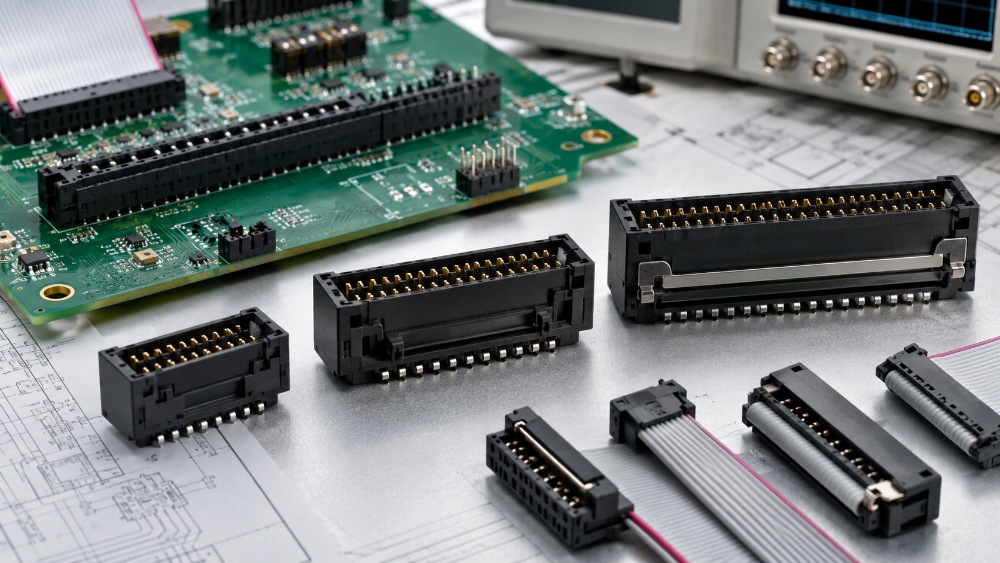
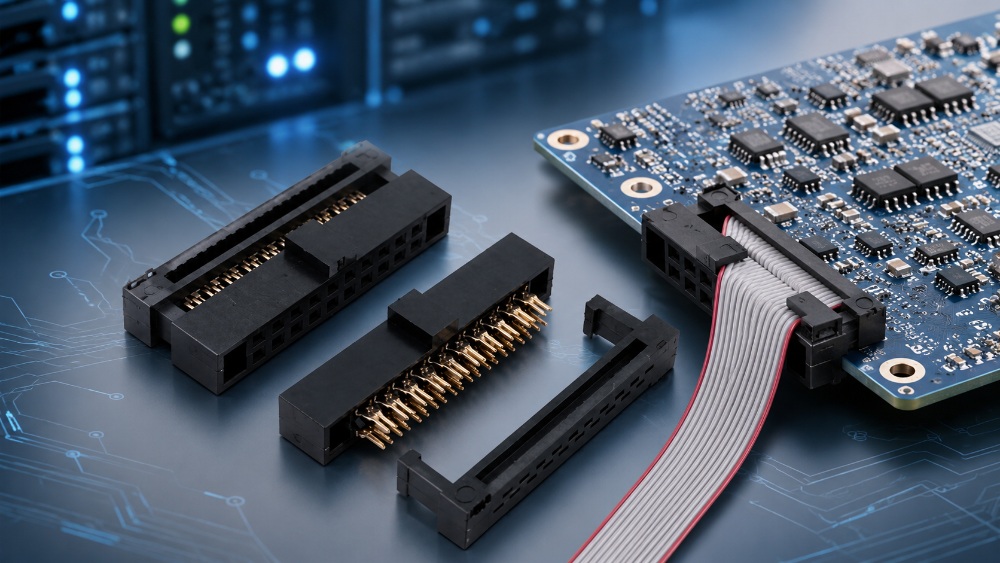
Le choix du pas des connecteurs peut influencer l'agencement complet du circuit imprimé. Deux connecteurs peuvent sembler similaires sur un schéma, mais des interfaces de 1,27 mm, 2,0 mm et 2,54 mm ne conviennent pas en termes d'espace disponible sur la carte, d'espacement des câbles, de processus d'assemblage ou de conditions d'utilisation. Pour les ingénieurs chargés de choisir les connecteurs carte-câble, le pas n'est pas un simple détail de catalogue. Il influe sur la précision de l'accouplement, l'ajustement fil-carte, la densité des broches, la manipulation et la stabilité de la connexion à long terme.
Ce guide compare les trois pas de connexion les plus courants pour les câbles plats IDC et explique leurs applications respectives. Il montre également comment choisir le type de connecteur adapté aux contraintes de l'agencement du circuit imprimé, plutôt que de se fier uniquement à son apparence.
Pourquoi le pas des connecteurs IDC est plus important que le nombre de broches
Le pas est le premier détail qui définit le système de connexion. Un connecteur à 20 broches avec un pas plus petit peut occuper beaucoup moins d'espace sur la carte qu'un connecteur à 20 broches avec un pas plus grand, mais il peut également nécessiter un contrôle d'assemblage plus strict et un appariement des câbles plus précis.
Le pas influe sur l'espacement des fils et l'appariement des câbles.
Le pas du connecteur IDC définit l'espacement entre les contacts et détermine sa compatibilité avec le câble plat, le connecteur mâle et l'empreinte du circuit imprimé. Un pas incorrect peut empêcher le connecteur de s'insérer correctement, créer un contact faible ou endommager la pièce à connecter lors de l'assemblage.
Il ne faut pas comparer les connecteurs de câbles plats uniquement en fonction du nombre de broches. Un connecteur de 1,27 mm convient à un type de câble et à une logique d'agencement différents de ceux d'un connecteur de 2,54 mm. Le pas influe également sur le dégagement pour le routage, la taille du boîtier et l'espace disponible pour les composants voisins.
Le risque d'assemblage augmente lorsque le pas est choisi tardivement.
Une modification tardive du pas peut entraîner des changements au niveau du câble, de l'empreinte du circuit imprimé, du boîtier, de l'outillage et de la méthode d'inspection. Les ingénieurs doivent confirmer le pas du connecteur, le pas du câble, le sens d'accouplement, les exigences de verrouillage et la hauteur disponible avant la phase de prototypage.
Connecteurs IDC de 1,27 mm pour circuits imprimés haute densité
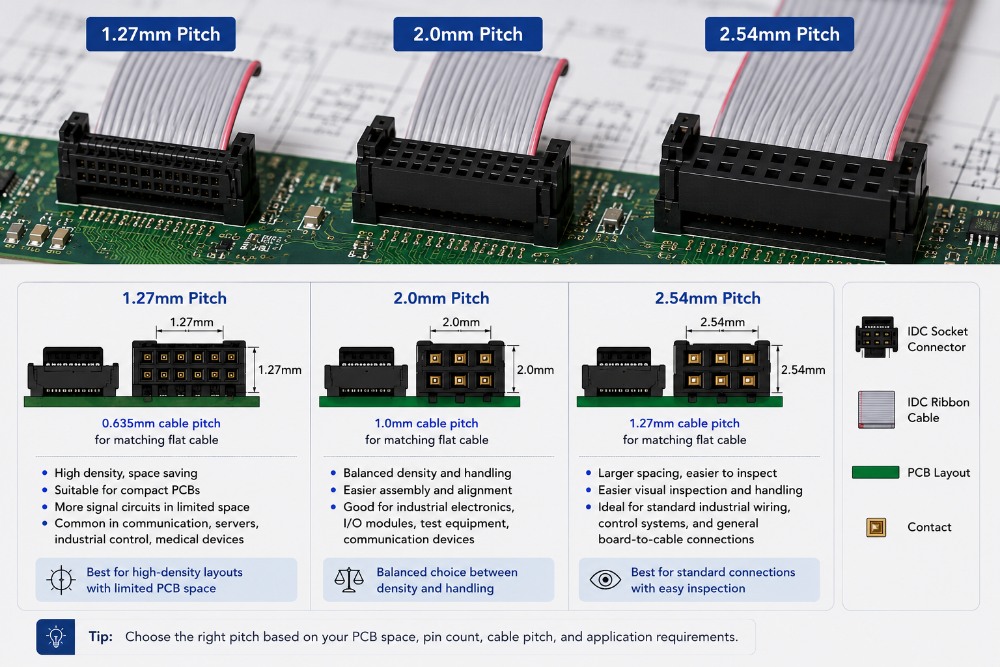
Un pas de 1,27 mm est utile lorsque l'espace sur le circuit imprimé est limité et qu'il est nécessaire d'augmenter le nombre de chemins de signal dans un espace réduit. Il est courant dans les systèmes électroniques compacts, les équipements de communication, le matériel serveur, les modules industriels et les dispositifs médicaux ou de test où une haute densité de câblage est essentielle.
Où un pas de 1,27 mm est le plus performant
Le principal avantage d'un connecteur IDC de 1,27 mm réside dans sa densité. Il peut accueillir davantage de conducteurs dans un format compact, ce qui permet aux concepteurs de réduire l'encombrement sur la carte et d'optimiser le cheminement des câbles internes. Ceci s'avère particulièrement utile pour les circuits comportant plusieurs canaux de signal, des modules denses ou des boîtiers de petite taille.
Un pas de câble plus petit exige généralement une attention accrue au raccordement des câbles, à l'orientation des connecteurs et à l'alignement de l'assemblage. Il est idéal pour les conceptions compactes, mais pas toujours le choix le plus simple pour la maintenance sur site.
Produit adapté aux connexions haute densité
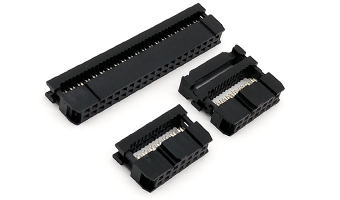
Le Connecteur de récipient IDC à deux pièces de 1,27 mm x 1,27 mm Ce câble est idéal pour les circuits imprimés haute densité nécessitant des options de connexion 06 à 80 broches. Son isolant PBT+GF UL94V-0, ses contacts en bronze phosphoreux, son plaquage or ou nickel, son courant nominal de 1 A, sa tension nominale de 250 V et sa plage de température de -40 °C à +105 °C lui confèrent la robustesse nécessaire aux connexions internes exigeantes.
Pour les configurations nécessitant une durabilité accrue du boîtier, le Connecteur de récipient IDC à pas de 1,27 mm × 1,27 mm avec construction de boîtier en plastique en trois pièces Cette solution peut être envisagée. Elle prend en charge les pas de 10 à 50 broches et utilise une structure de fixation externe en trois parties. Cette structure est avantageuse lorsque le projet exige un pas compact tout en assurant un support de boîtier plus robuste lors d'assemblages ou d'opérations de maintenance répétés.
Connecteurs IDC 2,0 mm pour les besoins de conception équilibrée
Un pas de 2,0 mm offre généralement un bon compromis entre densité et manipulation. Il permet un gain de place sur le circuit imprimé par rapport à un pas de 2,54 mm, tout en restant plus facile à assembler que de nombreux systèmes de connecteurs ultra-compacts.
Quand 2,0 mm devient le choix intermédiaire pratique
Un connecteur IDC de 2,0 mm est parfaitement adapté aux systèmes de contrôle industriel, aux modules d'E/S compacts, aux dispositifs de communication, aux équipements de test et aux serveurs. Il offre aux concepteurs plus d'espace que le connecteur de 1,27 mm pour la manipulation et la protection mécanique, tout en étant plus compact que celui de 2,54 mm.
Ce pas de vis convient aux équipements nécessitant un câblage compact sans trop pousser les tolérances d'assemblage, notamment lorsque la production en série exige un raccordement stable, une orientation claire et une terminaison efficace.
Produit adapté à une utilisation industrielle de câblage fil-carte
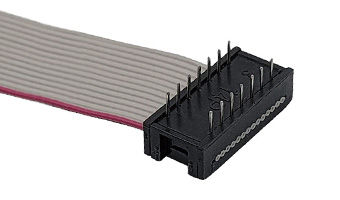
Le Connecteurs de prise IDC de 2,0 mm Compatible avec les configurations 06-80P. Utilise un isolant PBT+GF UL94V-0, des contacts en cuivre phosphoreux ou en laiton, des options de nickelage ou de plaquage or sur nickel, un courant nominal de 1 A, une tension nominale de 250 V, une résistance de contact de 20 mΩ et une plage de fonctionnement de -40 °C à +105 °C.
Sa structure permet un assemblage par sertissage unique, un raccordement infaillible, une conception anti-vibrations, une protection contre la condensation et un système anti-traction. Ces caractéristiques la rendent idéale pour les connecteurs de câbles plats IDC dans les équipements exigeant un équilibre entre vitesse de production, compacité et stabilité du transfert de signal.
Connecteurs IDC de 2,54 mm pour connexions industrielles standard
Le pas de 2,54 mm reste très répandu dans les équipements industriels. Bien qu'il ne soit pas le plus petit, il est courant, plus facile à inspecter et pratique pour de nombreuses connexions fil-carte standard.
Pourquoi le 2,54 mm reste utile
L'avantage principal d'un espacement de 2,54 mm réside dans la facilité d'entretien. Un espacement plus important facilite l'identification des composants et offre une plus grande tolérance lors des inspections et de la maintenance. Ceci est particulièrement important pour les armoires électriques industrielles, les systèmes CNC, les routeurs, les commutateurs, les serveurs et les équipements de test, où les techniciens peuvent être amenés à déconnecter ou à remplacer des pièces ultérieurement.
Un connecteur IDC de 2,54 mm convient souvent lorsque l'équipement ne nécessite pas le connecteur le plus petit possible, mais requiert un assemblage stable et des contrôles visuels plus faciles.
Produit adapté aux configurations standard carte-câble
Le Connecteurs de prise IDC de 2,54 mm Connecteur fil-carte Il prend en charge les normes 06-64P. Il utilise une isolation PBT+GF UL94V-0, des contacts en cuivre phosphoreux ou en laiton, des options de nickel ou de plaquage or sur nickel, un courant nominal de 1 A, une tension nominale de 250 V, une résistance de contact de 20 mΩ et une plage de fonctionnement de -40 °C à +105 °C.
Sa barre de verrouillage sécurisée, sa conception infaillible, sa structure anti-vibrations, sa conception anti-humidité et son système anti-traction contribuent à améliorer la précision d'assemblage et la stabilité de la connexion. Pour le câblage industriel standard, ce connecteur IDC est idéal lorsque l'accessibilité pour la maintenance et la fiabilité de l'installation sont essentielles.
Comparaison rapide selon les exigences du circuit imprimé
Les différentes configurations ne sont pas meilleures ou pires en soi. Elles correspondent simplement à des priorités d'aménagement différentes.
| Pas | Le meilleur ajustement | Principal avantage | Que vérifier |
| 1.27mm | Agencement dense de circuits imprimés, modules compacts, serveurs, équipements de communication | Permet de gagner de la place sur la carte et prend en charge le routage de signaux haute densité | Pas de câble, alignement, précision d'assemblage |
| 2.0mm | Électronique industrielle compacte, modules d'E/S, agencements équilibrés | Concilie gain de place et maniabilité | Nombre de goupilles, conception du verrou, dispositif anti-traction |
| 2.54mm | Câblage industriel standard, équipement réparable, connexions de circuits imprimés standard | Assemblage, inspection et maintenance simplifiés | Espace disponible sur la carte, compatibilité avec les connecteurs, cheminement des câbles |
Comment choisir le bon pas pour votre circuit imprimé
Commencez par examiner la carte. Vérifiez l'encombrement du circuit imprimé, la hauteur disponible, les composants voisins, le sens de sortie des câbles et l'accès prévu pour la maintenance. Confirmez ensuite le nombre de signaux, les broches de masse, les broches réservées et le pas des câbles plats.
Pour une configuration très dense, une épaisseur de 1,27 mm peut constituer un excellent point de départ. Si le projet exige à la fois un format compact et un assemblage simplifié, une épaisseur de 2,0 mm est souvent à considérer. Enfin, si l'espace est suffisant et que l'accès pour la maintenance est important, une épaisseur de 2,54 mm représente un choix plus sûr.
Pour les projets de connecteurs personnalisés, LEOCABLE peut aider à adapter le pas, le nombre de broches, le style de boîtier, l'option de plaquage et le sens de câblage à la configuration de l'équipement. Assistance OEM/ODM peut également aider les équipes à harmoniser les échantillons et les exigences de production avant le lancement des commandes par lots.
Conclusion : Choisissez le connecteur autour du circuit imprimé.
Le choix du pas approprié ne se limite pas à la taille. Il influe sur l'agencement du circuit imprimé, le câblage, la vitesse d'assemblage, l'accessibilité pour la maintenance et la fiabilité du signal. Un pas de 1,27 mm est optimal pour les conceptions haute densité. Un pas de 2,0 mm offre un bon compromis entre encombrement et facilité de manipulation. Un pas de 2,54 mm reste pratique pour les connexions industrielles standard nécessitant une inspection et une maintenance aisées.
Avant de faire votre choix définitif, comparez la disposition du circuit imprimé, le nombre de broches, l'espacement des câbles, la structure du boîtier et l'environnement d'utilisation. Vous prévoyez une nouvelle connexion de câble pour circuit imprimé ou le remplacement d'un connecteur existant ? Envoyez-nous votre disposition de circuit imprimé, le nombre de broches, l'espacement des câbles, le sens du connecteur et les informations relatives à votre environnement d'utilisation via notre formulaire. Prise en charge des connecteurs de prise IDCet notre équipe peut vous aider à choisir une option adaptée à votre équipement.
FAQ (questions fréquentes)
Q : Quelle est la principale différence entre les connecteurs IDC de 1,27 mm, 2,0 mm et 2,54 mm ?
A : La principale différence réside dans le pas. Celui-ci influe sur l'espace disponible sur le circuit imprimé, le câblage, les dimensions du boîtier, la manipulation lors de l'assemblage et la facilité de maintenance. Un pas plus petit permet un gain de place, tandis qu'un pas plus grand facilite la manipulation et l'inspection.
Q : Quel pas de connecteur IDC est le mieux adapté au câblage de circuits imprimés haute densité ?
Un pas de 1,27 mm est généralement préférable pour le câblage de circuits imprimés haute densité, car il permet des agencements compacts et un plus grand nombre de chemins de signal dans un espace réduit. Il exige également un appariement des câbles et un contrôle d'assemblage plus précis.
Q : Les connecteurs IDC de 2,54 mm sont-ils encore utiles dans les équipements modernes ?
A : Oui. Elles restent utiles dans les appareils industriels où l'accès pour la maintenance, l'inspection manuelle, la connexion standard carte-câble et l'assemblage stable importent plus que la miniaturisation extrême.